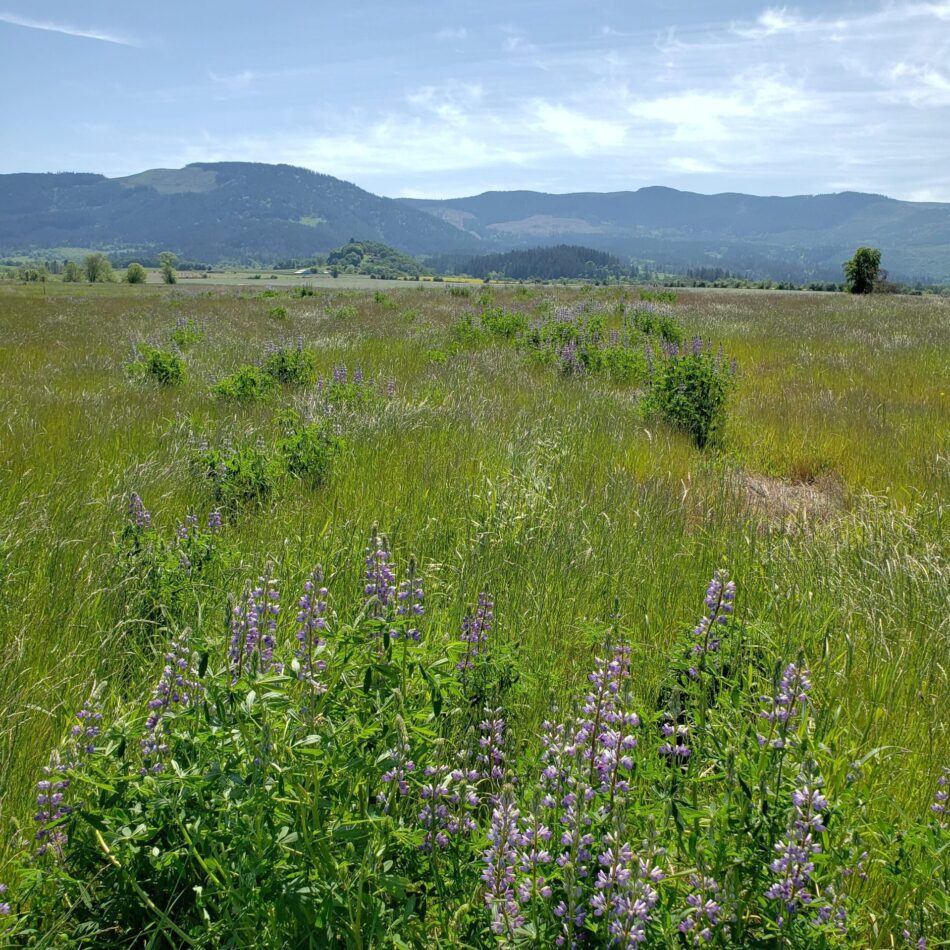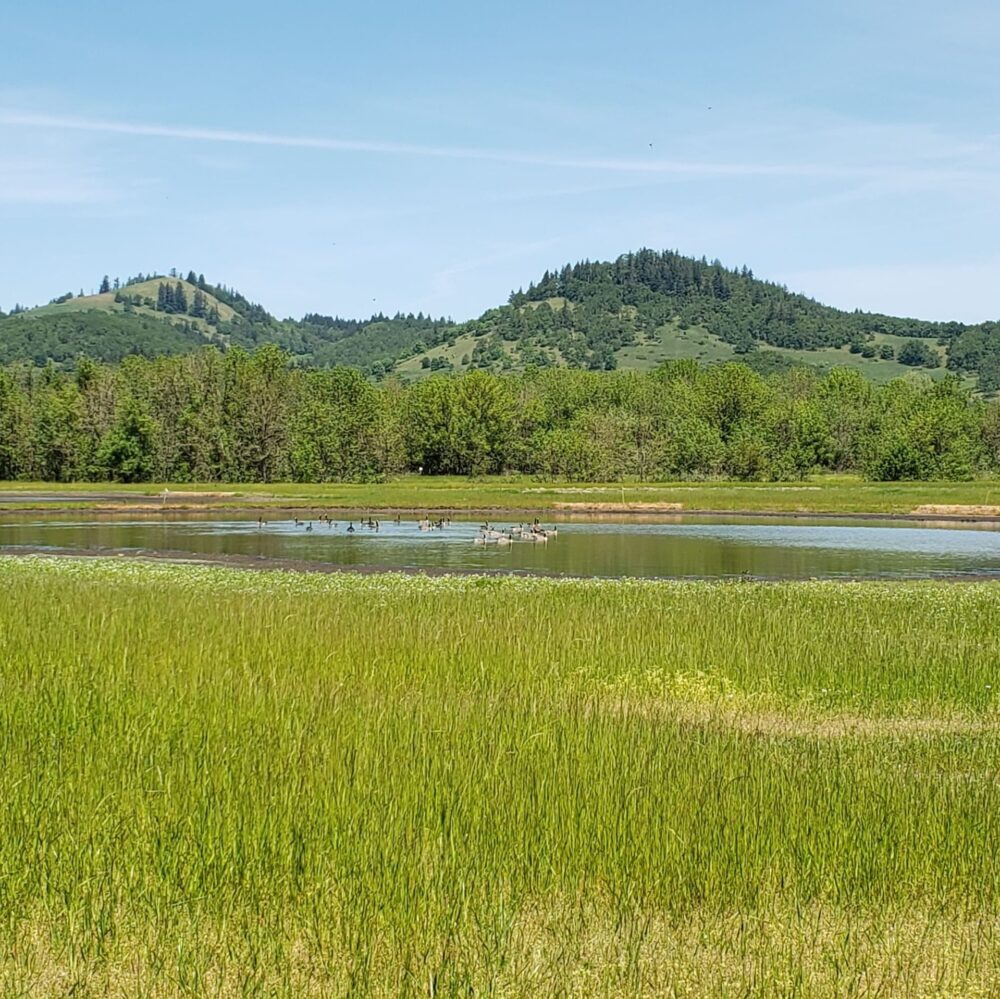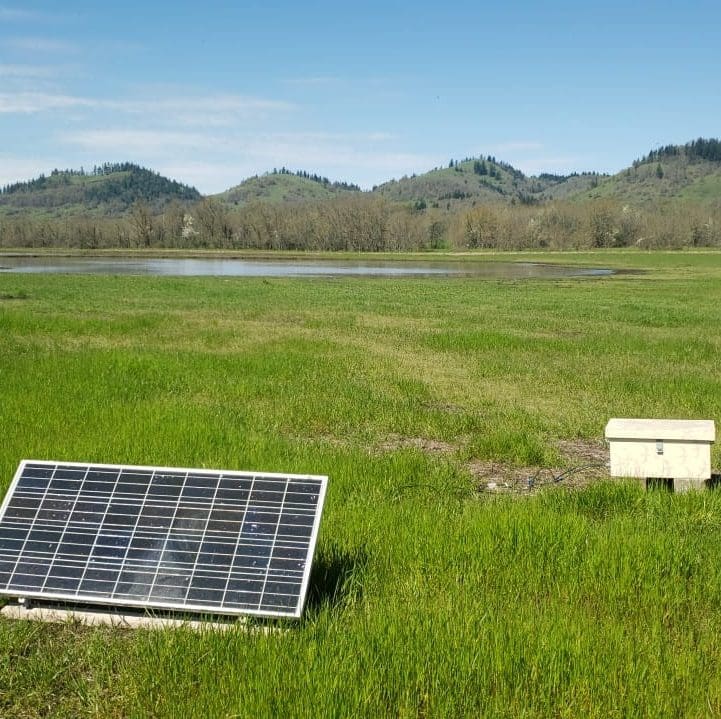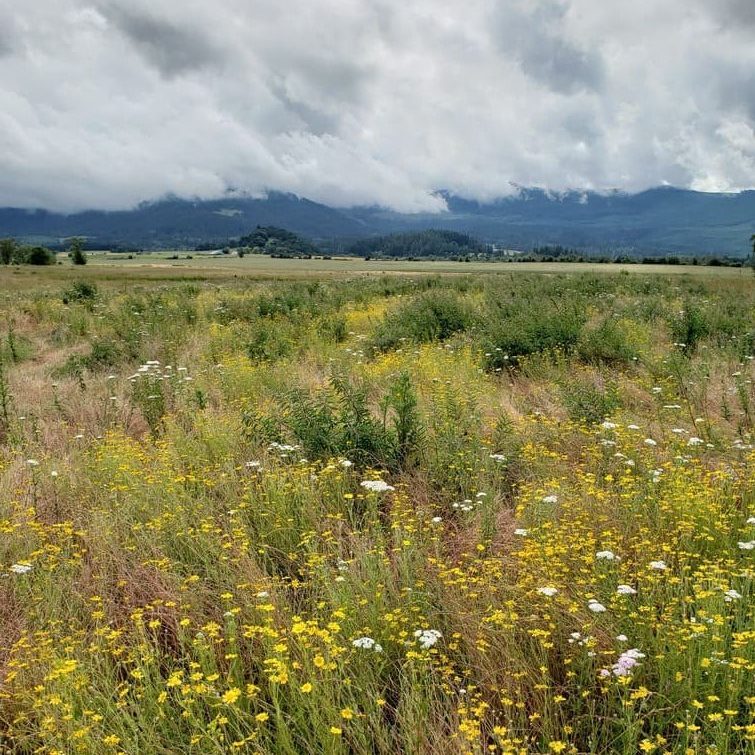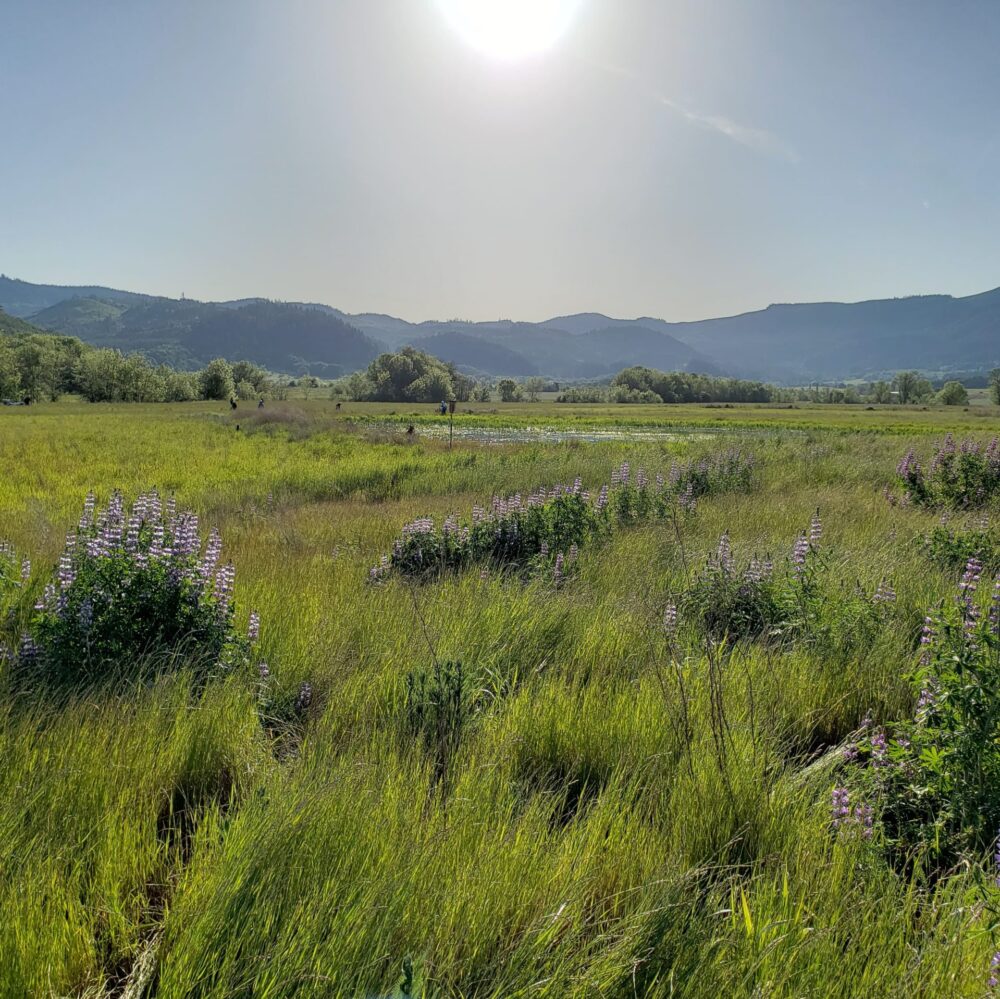

This restoration will reestablish 92 acres of wet and dry prairie and 27 acres of vernal pool and emergent wetland habitats.
wetland prairie restoration
Oregon’s Willamette Valley once held a mosaic of prairie and wetlands supporting exceptionally high species diversity with many dependent on these complex habitat . With less than 1% of prairie and wetland habitats remaining in the valley, and many associated species imperiled, it is vital to slow the rapid decline of these species by restoring large portions of habitat.
The Tub Run Phase II: Horned Lark Prairie and Wetland Restoration project seeks to restore 119 acres of native prairie and wetland habitat at the base of the Coburg Hills in the Muddy Creek watershed (Linn Co.)
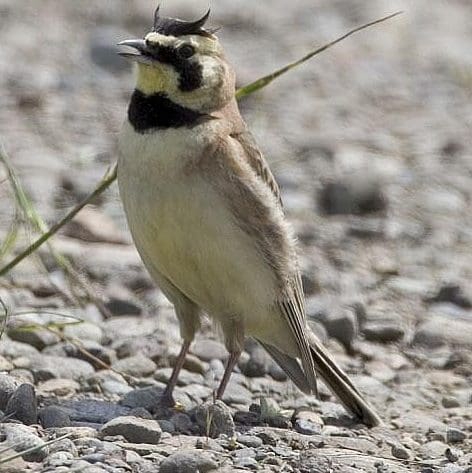
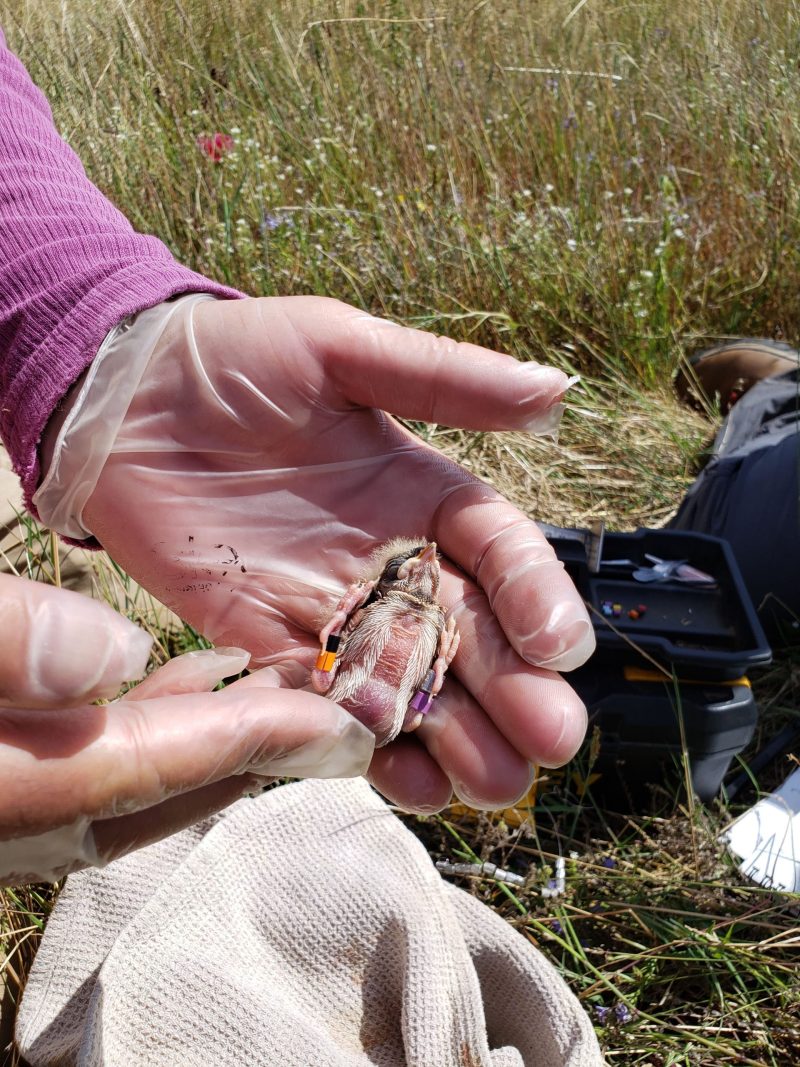
This privately owned property is in an area identified for its high potential for aiding in the recovery of declining grassland birds including the ESA-listed Streaked Horned Lark (Eremophila alpestris strigata).