
An Important Waterway
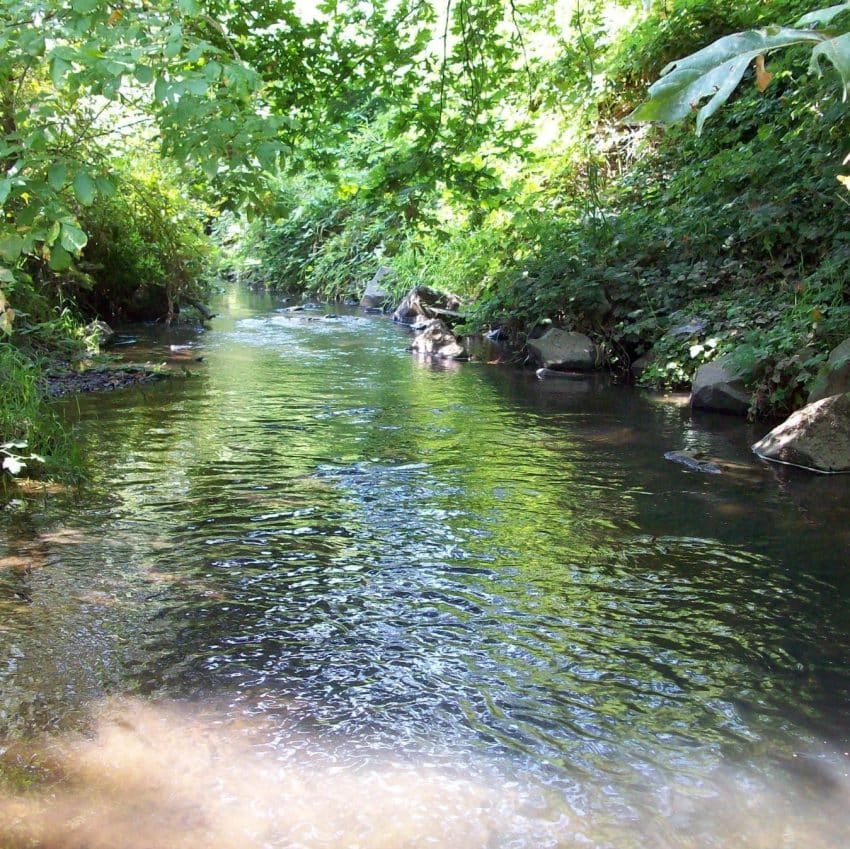
Periwinkle Creek begins its journey in the foothills east of Albany, flowing westward through the heart of the city. As it reaches its confluence with the Willamette River, the creek provides a vital ecological corridor. This junction offers high-quality habitat and essential rearing potential for native fish species, making it a key component of the local river ecosystem.
Albany’s Heritage
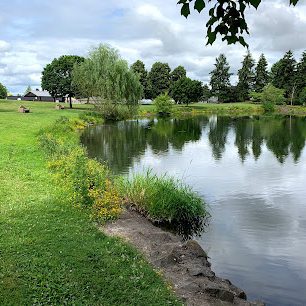
As a cornerstone of Albany’s natural heritage, Periwinkle Creek sustains a diverse ecosystem. From the salmon and beavers that rely on its waters to the abundant bird and pollinator populations thriving along its banks, the creek remains an essential habitat for Oregon’s native wildlife.
Restoring the Creek
While the Periwinkle Creek Watershed has seen a decline in biodiversity due to historical urban and agricultural expansion, it remains a focal point for conservation. Addressing this legacy of ecological degradation is essential to bringing back the vibrant wildlife populations that once thrived in these waters.
Periwinkle Creek receives more stormwater runoff than any other waterbody in the City of Albany, which can carry pollutants through the entire channel and into the Willamette River.
In recent years, increasing urbanization within the Periwinkle Creek floodplain has altered how the waterway handles seasonal flows. Because water can no longer spread naturally across the floodplain, it is confined to the main channel. This creates a surge in volume and velocity, leading to aggressive erosion that carves away at the creek banks. This process not only destroys vital wildlife habitat but also degrades water quality by increasing sediment runoff.
Riparian Restoration
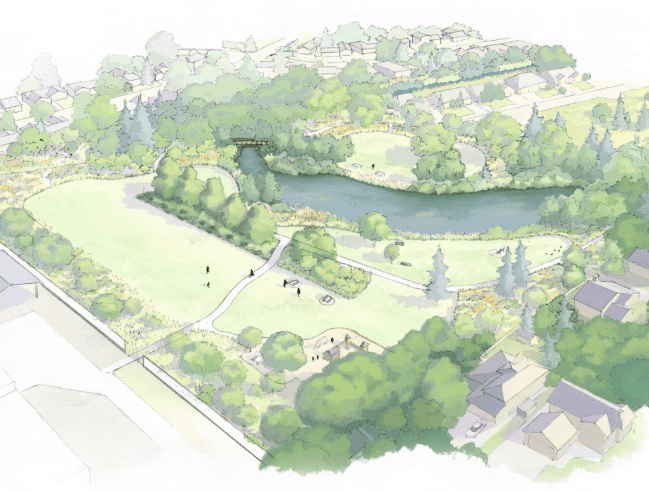
While urbanization has challenged the health of the watershed, we have the tools to reverse these trends. Riparian restoration offers a path to revitalize Periwinkle Creek through a multi-faceted approach. By integrating diverse native plantings and natural bank stabilization, we can control erosion and filter runoff. These efforts, combined with increasing canopy shade to cool the water, ensure that Periwinkle Creek remains a thriving sanctuary for Albany’s wildlife for generations to come.
Youth Education
Beyond enhancing the area’s biodiversity and natural beauty, Periwinkle Creek serves as a vibrant “living laboratory.” For students in our Youth Education Programs, the creek provides a rare opportunity to step out of the classroom and into nature. Here, they move from theory to practice—testing water quality, identifying native species, and observing ecological restoration in real-time. These hands-on experiences foster a deep, lifelong connection to the local environment and inspire the next generation of land stewards.
Awareness
The string of City parks along Periwinkle Creek provides more than just recreation; they are vital windows into our local environment. These accessible green spaces offer the perfect platform for public outreach, allowing residents to see habitat restoration and water quality initiatives in action. By turning our park system into an interactive educational corridor, we invite the entire community to take part in the story of the creek’s recovery.
implementation
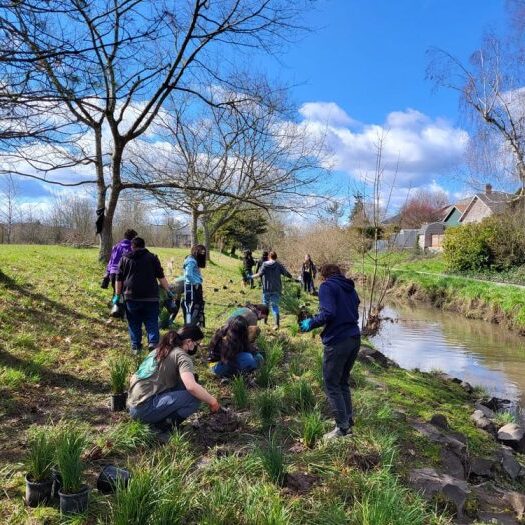
The CWC has also been partnering with the Albany community, especially South Albany HS, to enhance the native habitats around Periwinkle Creek since 2014.
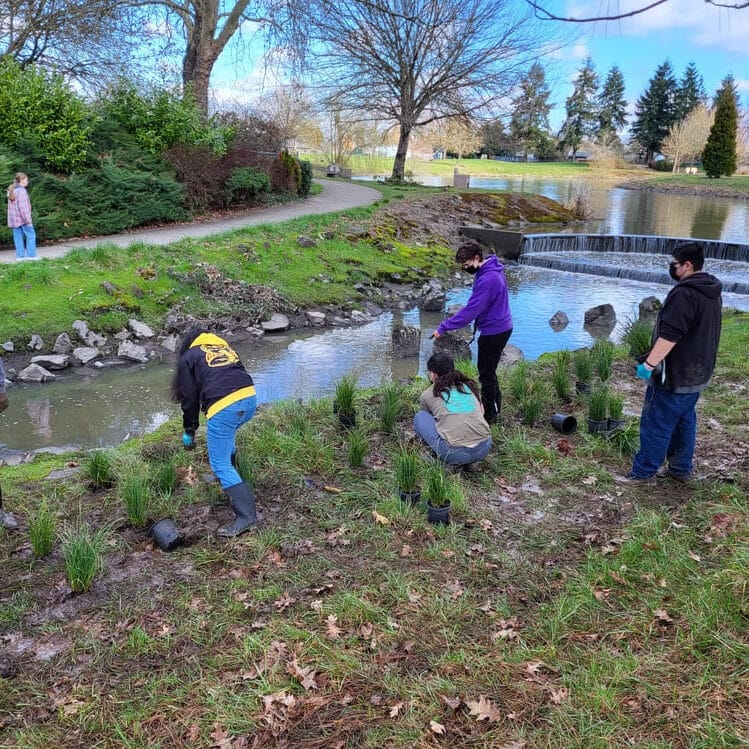
Thousands of native plants have been installed at Periwinkle and Bowman Parks and we are moving into a larger scale restoration beginning 2025.
Since 2016, restoration activities have created a more functional and resilient riparian zone along Periwinkle Creek benefitting fish and wildlife, accomplished through a significant reduction of invasive species, increasing structural diversity, reintroducing native riparian plant species, & buffering future stream temperatures (via shading). South Albany High School students spent many hours monitoring conditions and planting native species along the creek.
The next phase of restoration builds upon our existing investments along Periwinkle Creek, & 4,750 native plants installed along a total length of 2,800 feet. We have been thrilled by the survival of these plants, which has far exceeded our expectations. We are actively managing the area, and major planting is currently underway.